What to Do If You’ve Already Replied to a Scam
Steps to reduce risk and protect your accounts after engaging with a suspicious message.
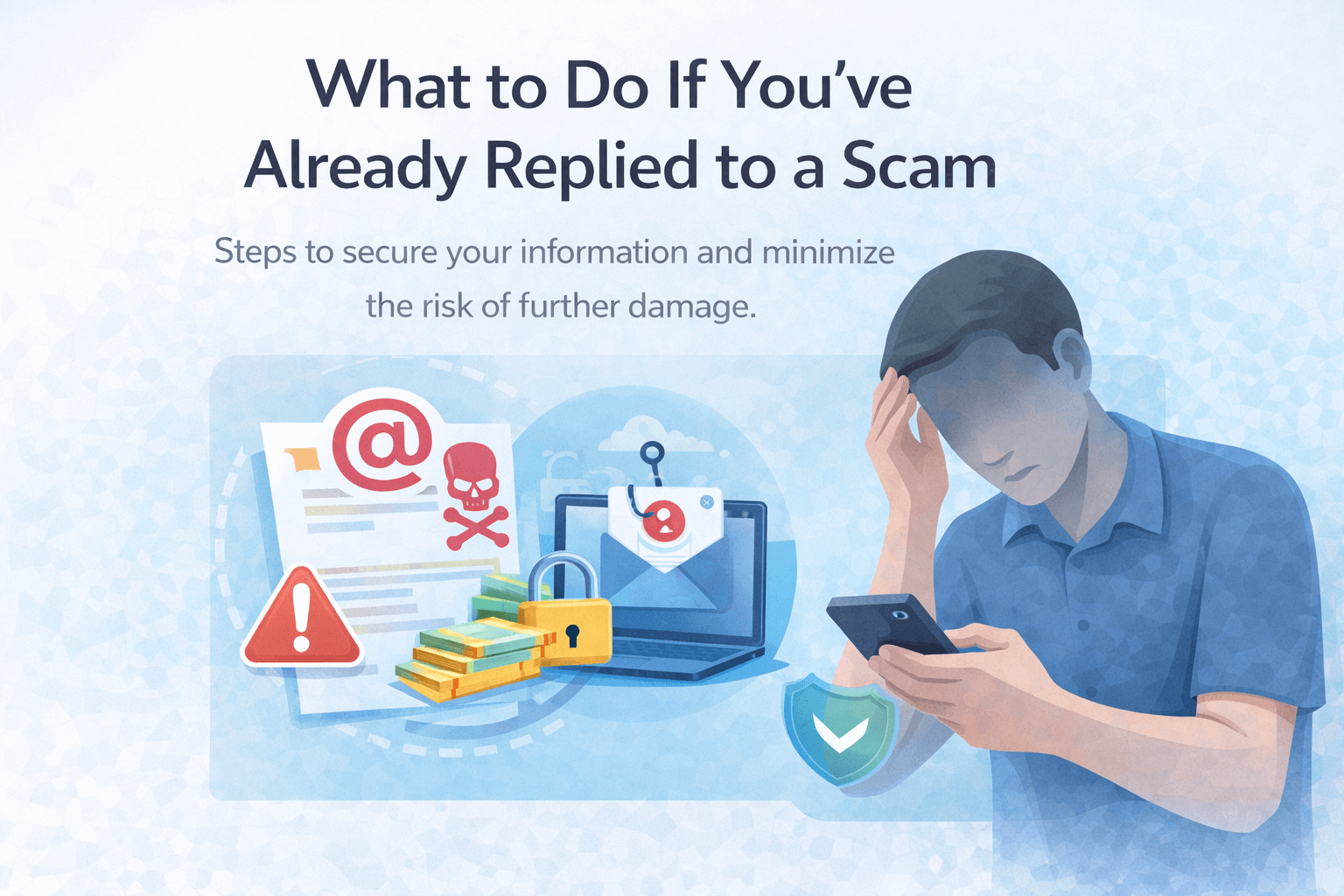
Realizing you may have replied to a scam message can be stressful. The good news is that replying alone doesn’t mean you’re compromised. What matters is what you do next.
This guide walks through practical steps to reduce risk, protect your accounts, and avoid further damage if you’ve already engaged with a suspicious message.
First: Stop Engaging Immediately
If you suspect a scam, do not reply again.
- Don’t explain yourself
- Don’t confront the sender
- Don’t click more links or download files
Scammers rely on continued interaction. Silence removes their leverage.
If possible, mute, block, or report the account on the platform you’re using.
If You Shared Personal Information
The risk depends on what you shared.
Low-risk information
Examples:
- Name
- Job title
- Public LinkedIn profile
In most cases, no immediate action is required. Just stay alert for follow-up attempts.
Higher-risk information
Examples:
- Email address used for logins
- Phone number
- Home address
- Copies of documents
What to do:
- Watch for phishing or impersonation attempts
- Be cautious of messages claiming to “verify” your identity
- Avoid responding to unexpected follow-ups referencing the same conversation
If You Shared Login Credentials or Codes
This is time-sensitive.
Act immediately:
- Change the affected password
- Change passwords on any other accounts using the same or similar password
- Enable two-factor authentication (2FA)
- Review recent login activity
- Log out of all active sessions if the platform allows it
If financial accounts are involved, notify the provider right away.
If You Clicked a Link or Downloaded a File
Not all links cause harm, but some are designed to capture credentials or install malware.
Recommended steps:
- Run a full security scan on your device
- Delete any downloaded files you don’t recognize
- Change important passwords as a precaution
- Monitor accounts for unusual activity
If your browser or system warned you during the download, take that warning seriously.
If You Sent Money or Crypto
Unfortunately, financial losses are often hard to reverse.
Do this immediately:
- Contact your bank or payment provider
- Report the transaction as fraud
- Save all communication and transaction details
- Report the scam on the platform where it started
Even if recovery isn’t possible, reporting helps prevent future victims.
How to Protect Yourself Going Forward
Most scams succeed because they pressure people to respond quickly.
Simple habits reduce risk dramatically:
- Slow down before replying
- Verify recruiters and companies independently
- Be cautious when asked to move conversations off-platform
- Treat urgent requests as red flags
Using tools like DoubleCheck can help analyze message patterns and flag common scam tactics before you respond.
Final Thoughts
Replying to a scam message doesn’t make you careless or naive. Scammers are persistent and increasingly sophisticated.
What matters is recognizing the situation early and taking calm, practical steps to protect yourself.
When in doubt, pause — and verify before engaging again.