Top Red Flags in Fake Job Offers
Key warning signs that a job offer might be a scam targeting job seekers.
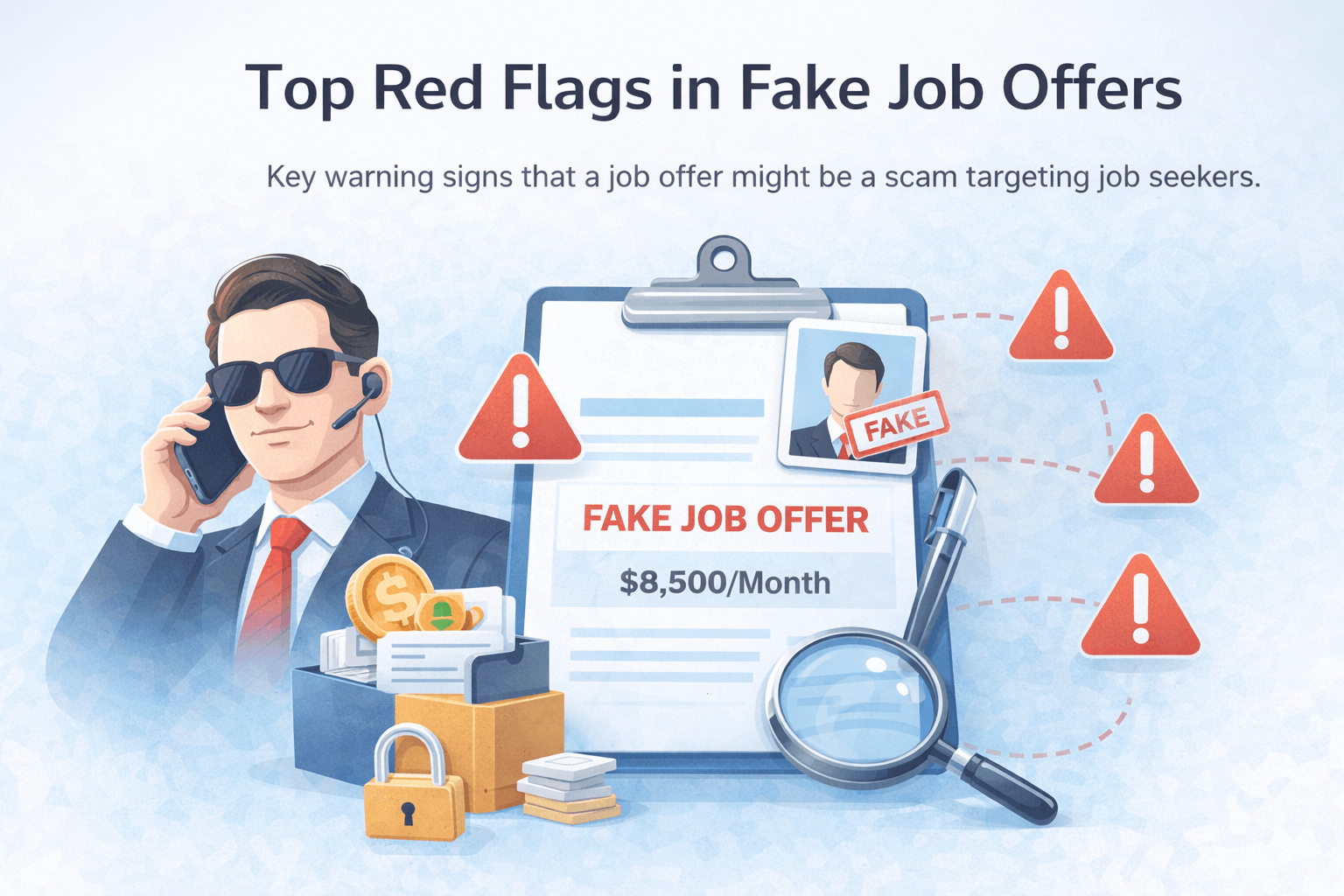
Fake job offers are a common scam used to target job seekers on platforms like LinkedIn, Facebook, Telegram, and email. These scams are designed to look legitimate while pressuring victims into sharing personal information, sending money, or installing malicious software.
Knowing the warning signs can help you spot a fake job offer before it causes damage.
Why Fake Job Offers Are So Effective
Scammers take advantage of people who are actively looking for work. They use:
- Professional language
- Familiar hiring processes
- Well-known platforms
Because job hunting already involves trust, fake offers can feel real at first glance.
1. Unrealistic Salary or Benefits
One of the most obvious red flags is pay that doesn’t match the role.
Be cautious if a job offer promises:
- High income for minimal work
- No experience required with senior-level pay
- Vague responsibilities paired with big rewards
If the salary sounds too good to be true, it usually is.
2. Urgent or High-Pressure Messaging
Fake recruiters often create urgency to stop you from thinking clearly.
Common pressure tactics include:
- “Immediate hiring”
- “Final offer — respond today”
- “Limited availability”
Legitimate employers allow time for review and questions.
3. Weak or Missing Company Information
Always research the company behind a job offer.
Red flags include:
- No official website
- Recently created social profiles
- No real employees listed online
- Generic or copied company descriptions
A real employer has a consistent and verifiable online presence.
4. Requests to Move the Conversation Elsewhere
Scammers often ask to continue the conversation off the original platform.
Watch for requests like:
- Moving from LinkedIn to Telegram or WhatsApp
- Contacting a “recruiter” via private email immediately
This is commonly used to avoid platform moderation and reporting.
5. Requests for Money or Sensitive Information
This is a critical warning sign.
Fake job offers may ask for:
- Application or training fees
- Payments for equipment or onboarding
- Personal documents early in the process
- Files or software downloads
Real employers do not charge candidates or request sensitive data upfront.
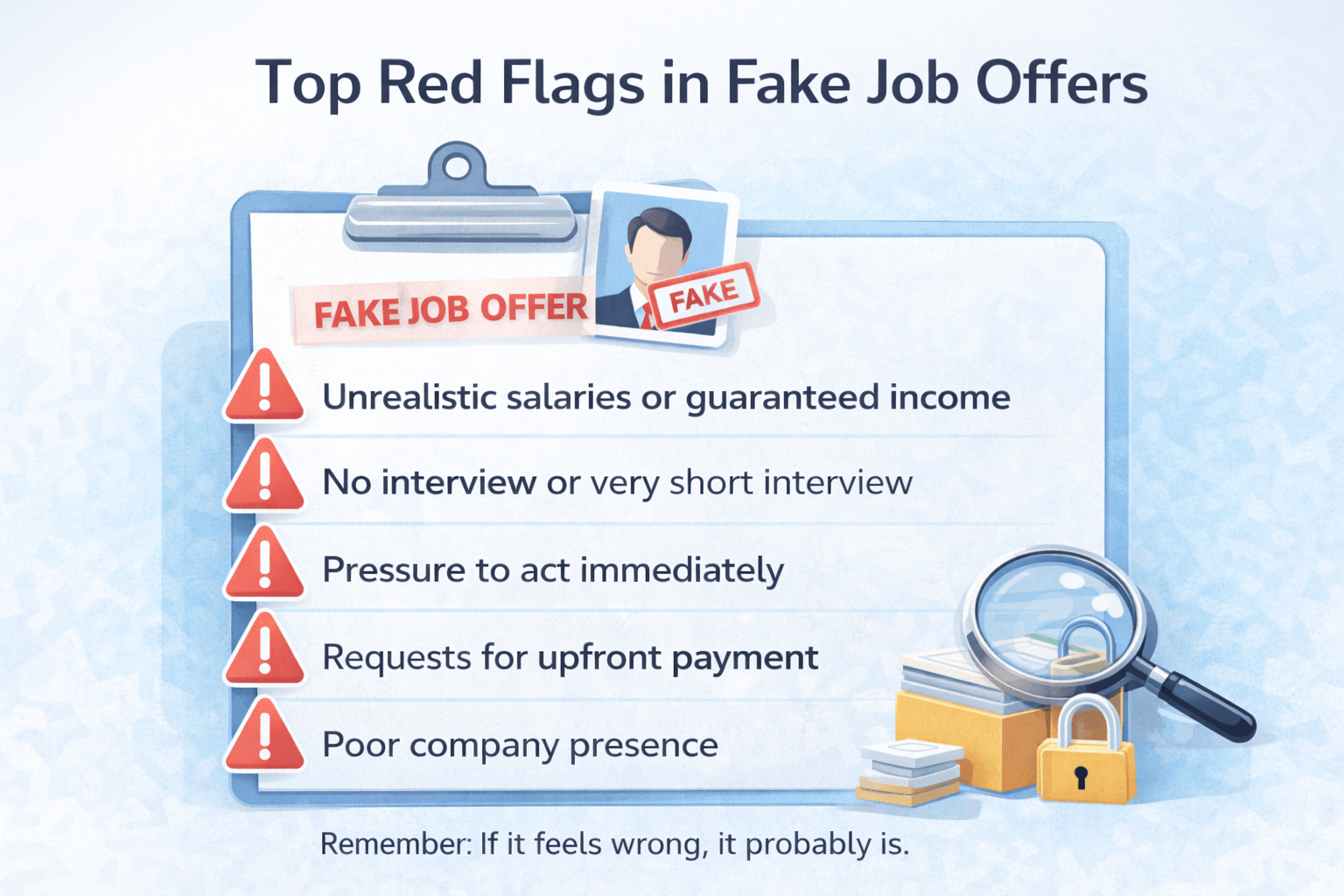 Top red flags in fake job offers
How to Protect Yourself from Job Scams
To reduce risk:
- Verify the company independently
- Avoid rushing into decisions
- Never send money or sensitive information
- Question unsolicited job offers
Tools like DoubleCheck can help identify scam patterns in messages before you reply.
Related Reading
Final Thoughts
Fake job offers rely on urgency, trust, and unrealistic promises. Slowing down, verifying details, and recognizing common red flags can help you avoid costly mistakes.
If something feels off, pause and investigate — it’s always better to be cautious.