Telegram Crypto Bait Patterns
Recognizing cryptocurrency scams and investment schemes on messaging platforms.
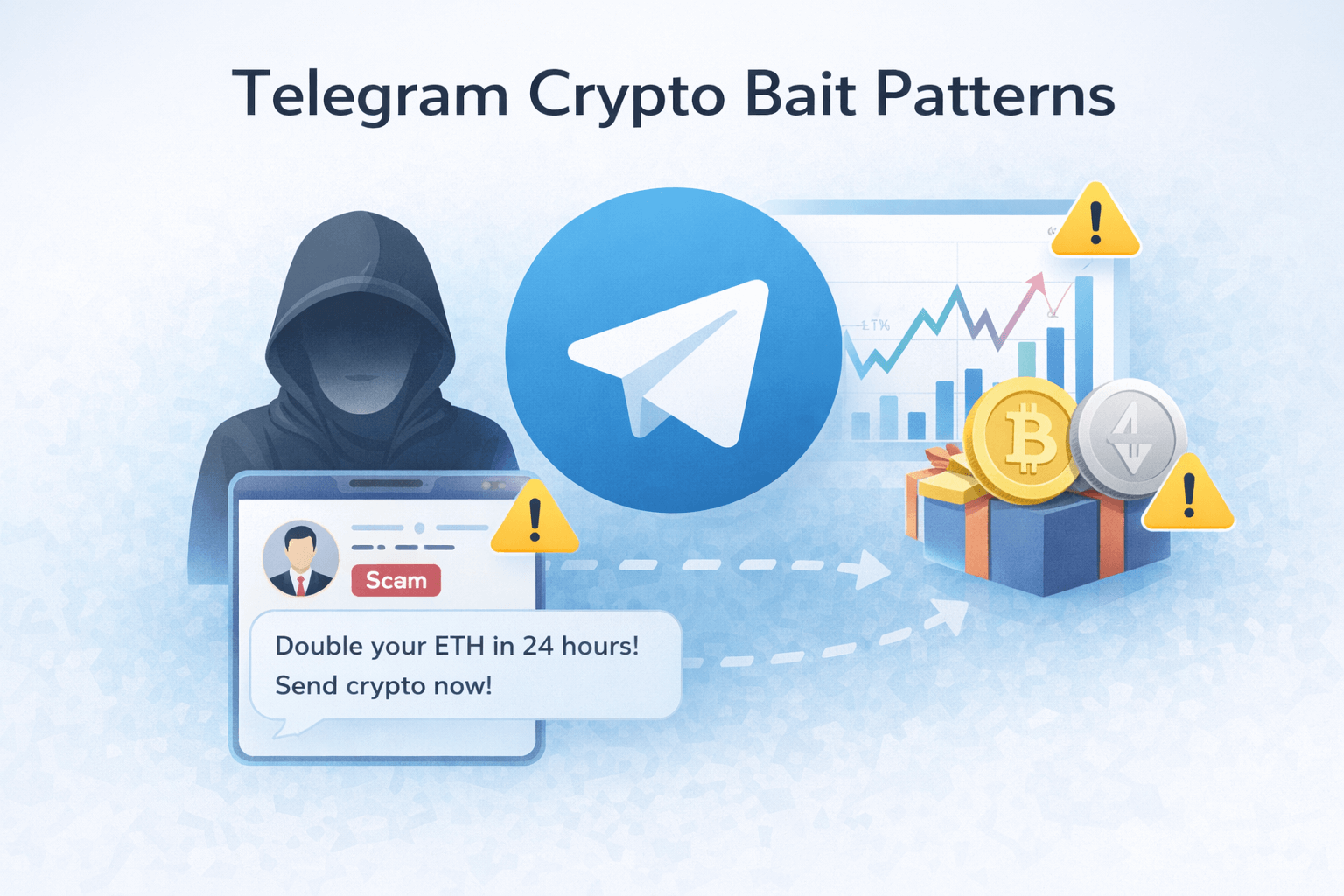
Telegram has become one of the most common platforms for crypto-related scams. Its privacy features, large public groups, and easy direct messaging make it attractive not just for crypto communities — but also for scammers.
Here’s how these scams usually work, what red flags to watch for, and how to protect yourself.
Why Telegram Is Popular With Crypto Scammers
Telegram wasn’t built for scams — but scammers love it because:
- Easy anonymity – accounts can be created quickly with little verification
- Large public groups – thousands of users can be targeted at once
- Private messaging – conversations move off public platforms fast
- Crypto-native culture – users expect tokens, wallets, and links
This creates the perfect environment for fake investment offers to look “normal.”
Common Telegram Crypto Scam Patterns
Fake Investment Groups
Scammers invite you to a Telegram group that looks active and professional. There may be fake success screenshots, bots posting “profits,” and admins claiming insider knowledge.
Once trust is built, users are asked to:
- Send crypto to a wallet
- Connect to a suspicious website
- Pay a “fee” to unlock profits
Guaranteed Returns
Any message promising guaranteed profits is a major red flag.
Examples:
“100% safe returns”
“Double your ETH in 24 hours”
“Risk-free arbitrage”
Real investments never guarantee returns.
Pressure to Act Fast
Scammers create urgency to stop you from thinking.
Common phrases:
“Last slots available”
“Offer expires today”
“Only for early members”
If you’re rushed, you’re being manipulated.
Requests to Send Crypto
You may be asked to send funds to:
- A “trading bot”
- A “manager wallet”
- A “liquidity pool”
Once crypto is sent, it’s gone. There is no recovery.
Impersonation
Some scammers pretend to be:
- Known crypto influencers
- Exchange support staff
- Admins from legitimate groups
They often copy profile photos and usernames to look real.
Red Flags to Watch For
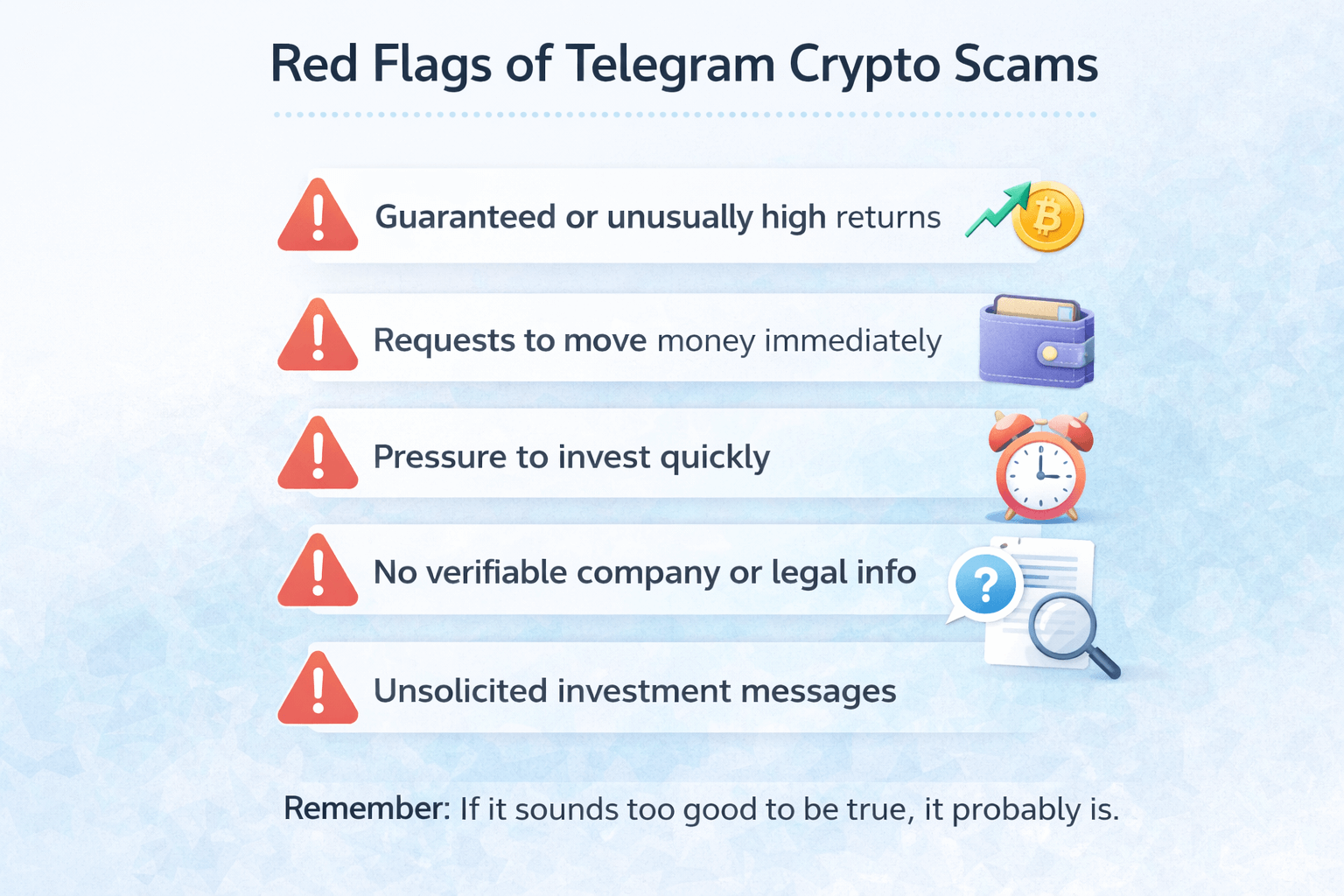 Red flags of Telegram crypto scams
If you see any of these together, stop:
- Promises of guaranteed or unusually high returns
- Pressure to invest quickly
- Requests to move money immediately
- No verifiable company, website, or legal info
- Unsolicited DMs about investments
If it sounds too good to be true — it almost always is.
How to Protect Yourself on Telegram
- Never send crypto to people you don’t know
- Verify projects outside Telegram (official sites, GitHub, reputable news)
- Don’t trust screenshots or testimonials
- Avoid “investment help” from strangers
- Scan suspicious messages before replying
Tools like DoubleCheck can help flag common scam patterns before you engage — so you don’t reply blindly.
Related Reading
Final Thoughts
Crypto scams evolve constantly, but the patterns stay the same: urgency, promises, and pressure.
Telegram itself isn’t the problem — blind trust is.
Stay cautious, take your time, and always question messages that push you to act fast with money.