Examples of Real Scams
Learn about common scam patterns and how to spot them before they cause harm.
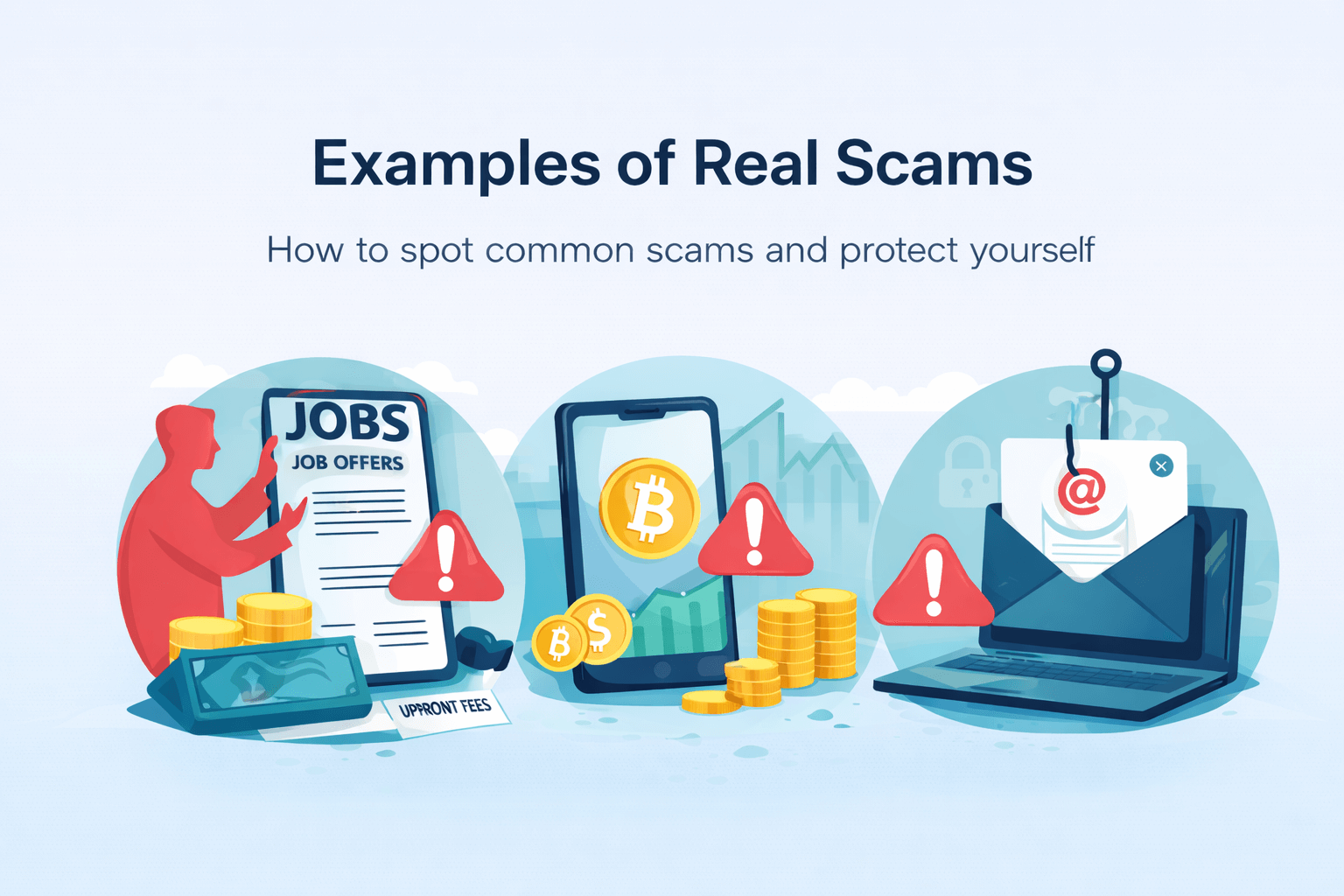
Scams don’t always look suspicious at first. Many are designed to feel normal, professional, or even helpful. Below are real-world scam examples people encounter every day—and how to recognize them before damage is done.
Fake Job Offers
Fake job offers are one of the most common online scams, especially on professional platforms and messaging apps.
Scammers often post roles with:
- Very high salaries for minimal experience
- Remote-only positions with vague responsibilities
- Immediate hiring without interviews
Once contact is made, they may ask for:
- Application or “processing” fees
- Copies of personal documents
- Bank details or crypto payments
Real employers never ask for money or sensitive information upfront.
Crypto Investment Schemes
Crypto scams frequently promise fast, guaranteed profits. These offers often arrive via direct messages, group chats, or referrals from strangers.
Common signs include:
- Claims of “guaranteed returns”
- Pressure to invest quickly before a deadline
- Requests to send crypto to private wallets
Legitimate investments always carry risk. If returns are guaranteed, it’s almost always a scam.
Phishing Attempts
Phishing messages are designed to steal login credentials or personal data by impersonating trusted services.
These messages often:
- Claim there’s a security issue or account problem
- Ask you to “verify” or “confirm” information
- Contain suspicious links or shortened URLs
Once clicked, users are taken to fake login pages that look real but capture credentials.
How to Spot These Scams Early
Across all scam types, the warning signs are often similar:
- Urgency or pressure to act fast
- Requests to move conversations off-platform
- Poor grammar or inconsistent branding
- Asking for money, passwords, or private keys
If something feels off, it usually is.
Protect Yourself
Always verify offers independently and avoid acting on pressure. Never share sensitive information in response to unsolicited messages.
Tools like DoubleCheck help by analyzing message patterns and warning you before you reply—adding context where scams often hide.
Related Reading
When in doubt, pause and verify. One careful moment can prevent serious loss.
Crypto Investment Schemes
Promises of guaranteed returns on cryptocurrency investments are almost always scams. Legitimate investments don't guarantee returns.
Phishing Attempts
Messages asking you to verify your account or click suspicious links are often phishing attempts to steal your credentials.